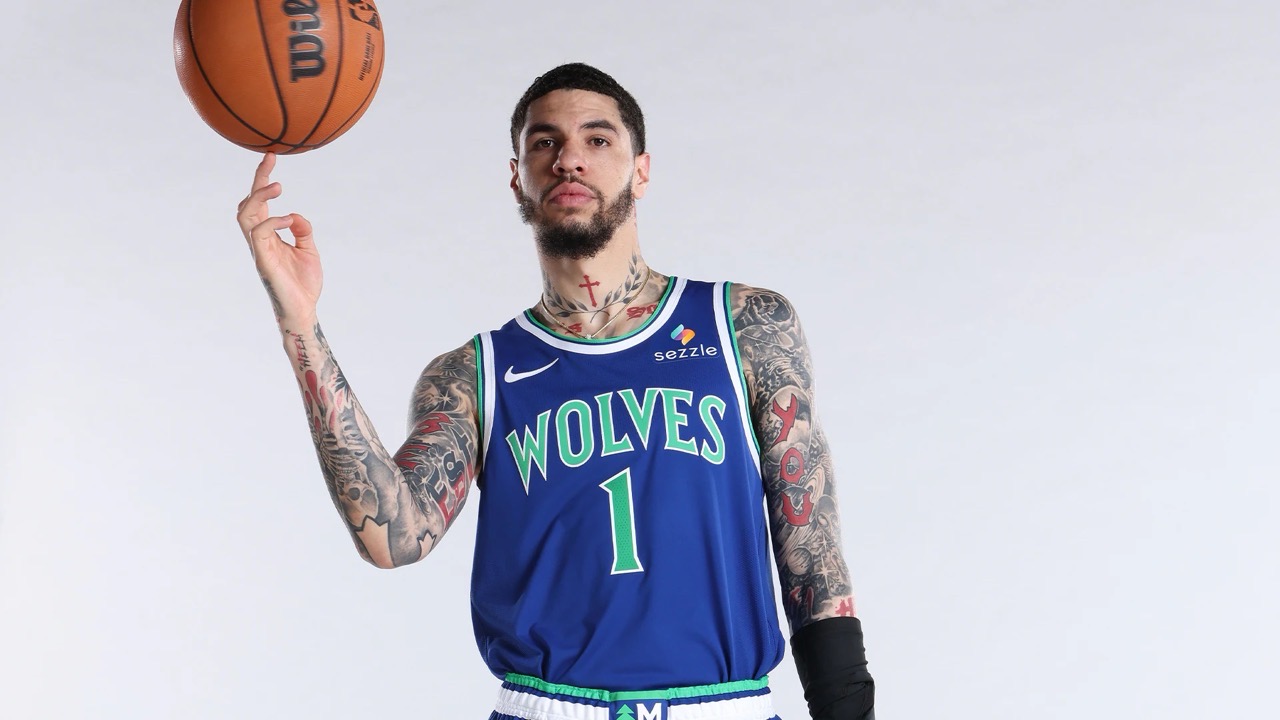
| Minnesota receives | Charlotte receives |
|---|---|
| LaMelo Ball | Naz Reid |
| Josh Green | Unprotected 2033 Minnesota first-round pick |
| 2028, 2029 and 2030 first-round swap rights | |
| 2029, 2032 and 2033 second-round picks |
The full terms were reported by NBA.com.
Last month, I opened up my phone to news that I couldn't believe. My Minnesota Timberwolves had acquired LaMelo Ball.
Minnesota acquired the best and hardest-to-find player in the deal without giving up Jaden McDaniels, Joan Beringer, Terrence Shannon Jr. or a near-term first-round pick. Big guards who can create off the dribble, fire ten threes a night, and see passes before the defense knows they are open are rare. Stretch bigs as talented as Reid are valuable, but they are more replaceable.
Still, there is an important distinction between winning the trade and winning the offseason. The deal raises Minnesota’s playoff ceiling, but the Wolves have also lost Julius Randle, Reid, Mike Conley and Kyle Anderson, while Donte DiVincenzo is recovering from a torn Achilles. The top of the roster is more dynamic, but the bench depth remains shaky for the Wolves.
My initial verdict is that Minnesota won this trade (I'd say 60–40 on expected basketball value). I would give the Timberwolves a B+ and the Hornets a B-/C+. I'm pricing in a lot of optionality/future ceiling for the Hornets here.
Why Minnesota made the bet
The Timberwolves finished 49–33 for the second straight season. They beat Denver in six games despite injuries, then lost 4–2 to San Antonio in a series that included three blowout defeats (Game 6 was a nightmare for our watch party). Minnesota’s postseason offense produced only 107.4 points per 100 possessions and a minus-5.8 net rating. Injuries distorted those numbers, but the larger issue was all-too-familiar for the fanbase: the Wolves could defend elite opponents without consistently creating elite offense. NBA’s playoff data reflects that imbalance.
The offseason became a time to reset the roster philosophy. Minnesota moved Randle after he averaged 21.1 points, 6.7 rebounds and 5.0 assists but shot 39% from the field and 24.4% from three in the playoffs. The Wolves retained Ayo Dosunmu on a five-year, $112 million contract after he shot 52.1% overall and 41.4% from three following his arrival. Conley and Anderson departed, Reid became the centerpiece of the Ball trade, and DiVincenzo’s injury created another immediate hole. NBA.com’s offseason tracker captures the scale of the turnover.
Minnesota is now building around two 24-year-old perimeter stars, with Rudy Gobert and McDaniels responsible for keeping the defense intact.
The numbers behind the trade
Here is the statistical core of the deal, using 2025–26 data from Basketball Reference, NBA tracking, and Dunks & Threes:
| Player | Games | PTS / REB / AST | True shooting | 3-point shooting | EPM |
|---|---|---|---|---|---|
| LaMelo Ball | 72 | 20.1 / 4.8 / 7.1 | 54.6% | 36.8% on 10.3 attempts | +4.51 |
| Anthony Edwards | 61 | 28.8 / 5.0 / 3.7 | 61.7% | 39.9% on 8.4 attempts | +3.06 |
| Naz Reid | 77 | 13.6 / 6.2 / 2.2 | 56.5% | 36.2% on 5.8 attempts | ~0.00 |
| Rudy Gobert | 76 | 10.9 / 11.5 / 1.7 | 66.4% | +1.97 | |
| Jaden McDaniels | 73 | 14.8 / 4.2 / 2.7 | 61.1% | 41.2% | +0.95 |
EPM estimates a player’s effect on scoring margin per 100 possessions while accounting for teammates and opponents. It is not a perfect measure, but the gap is large enough to be meaningful. Ball’s estimated impact was substantially greater than Reid’s last season. Dunks & Threes explains its methodology here.
The real attraction, though, is that Melo can change Ant's job description.
Edwards made 49.6% of his 139 catch-and-shoot threes last season, the best in the league among players with his shooting volume. He made only 35.3% of his 363 pull-up attempts, yet just 28% of his threes came off the catch. Minnesota asked him to generate (and at times, force) too much of his own offense because we lacked a high-level playmaker.
Ball can correct that imbalance. Ant should remain Minnesota’s primary scorer and game-closer. However, the Wolves can now make Ball the primary organizer: pushing the ball, initiating pick-and-rolls, and distributing the ball to Edwards.
The ideal possession is no longer Edwards walking the ball up against a set defense and improvising into a second defender (which we saw happen numerous times in the playoffs). Now, Ball can force some rotations and find Edwards in a better opportunity. NBA tracking data shows how valuable that change could be.
Charlotte’s on/off results strengthen the case. The Hornets scored 123.2 points per 100 possessions with Ball on the floor and 110.6 without him, a 12.6-point difference. Their "Ball–Knueppel–Miller–Bridges–Diabaté" lineup posted a plus-26.4 net rating across 509 minutes, the best mark for any 250-minute lineup in the NBA’s available database going back to 2007–08. Minnesota can reproduce much of that structure.
Minnesota's playstyle with LaMelo
My first instinct was that Ball and Edwards should lead a seven-seconds-or-less attack.
Charlotte ranked just 26th in pace (average number of possessions a team has per game) last season, while Minnesota ranked ninth. Though this statistic may suggest Ball's Hornets weren't super dynamic, what Melo does exceptionally well is recognizing transition opportunities early and advancing the ball with passes instead of dribbles. Charlotte generated 15.3 fast-break points per 48 minutes with him and only 11.0 without him.
Selective transition aggression is the model. Minnesota should target roughly 101–103 possessions per game, but pace itself should not be the goal. The real targets are early-clock efficiency, paint touches and attacking before matchups are organized.
An interesting half-court system will be the Ball–Gobert pick-and-roll. Ball has never played with a screener and vertical target quite like Gobert; Gobert has never played with a passer who sees weak-side windows quite like Ball. With Edwards on the weak-side wing and McDaniels or Dosunmu in the corners, every defensive answer creates a different problem:
- Drop coverage concedes Ball’s pull-up three.
- Blitzing allows him to pass over the trap.
- Tagging Gobert risks leaving Edwards, a 49.6% catch-and-shoot threat.
- Helping off McDaniels or Dosunmu means abandoning shooters who topped 41% last season.
Minnesota also needs guard-to-guard screening between Ball and Edwards. Ant can ghost a screen and pop, Ball can screen and slip, or either player can pitch the ball and immediately screen for the other. Those actions force opponents to reveal which matchup they are willing to lose and activate more players on the offensive end of the court. Recall one of the biggest problems the Wolves had in the playoffs: the lack of movement seen in non-handlers throughout offensive possessions. This new combo would solve a part of that issue.
I would also feature Edwards in pindowns, Chicago action, and Spain pick-and-roll rather than leaving him stationary above the arc. Ant catching with his shoulders pointed toward the rim is far more dangerous than Ant receiving the ball 28 feet away against a loaded defense.
Why it can still fail
Ball’s health is the largest risk. His games played by season are 51, 75, 36, 22, 47 and 72. Before last year, he had missed 141 games over three seasons. His healthiest campaign also came with a career-low 28.0 minutes per game, suggesting Charlotte’s workload management may have mattered. Minnesota should keep him near 30–32 regular-season minutes instead of chasing a few extra wins in November. The Associated Press details both his injury history and contract situation.
His shot selection is the second concern. Ball’s 54.6% true shooting is pretty bad for a lead creator because he takes extremely deep pull-ups, reaches the line only 2.5 times per game, and does not consistently pressure the rim. Minnesota should preserve the gravity created by his range while pruning his less productive attempts. One fewer 29-footer and one more paint touch per game would be a healthy trade.
The third concern is defensive dependence on Gobert. Minnesota allowed 108.0 points per 100 possessions with Gobert and 115.9 without him last season. Ball and Edwards are not consistent point-of-attack defenders, so Gobert’s ability to erase mistakes is now more important, not less. Trading him simply to play faster would solve the wrong problem.
The most immediate structural weakness is power forward and defensive rebounding. Minnesota played 3,276 minutes last season with at least two of Gobert, Randle and Reid on the court. Now McDaniels, listed at 185 pounds, may be the nominal four. Trey Lyles adds shooting and Beringer adds length, but neither can be assumed to replace the Randle–Reid workload in a playoff rotation.
Minnesota was already slightly below league average in defensive rebounding percentage. A Ball–Dosunmu–Edwards–McDaniels–Gobert lineup can work, but every perimeter player must help finish possessions. McDaniels’ four rebounds per game will need to become six or seven, and Ball and Edwards cannot both leak into transition before the ball is secured.
My projection model
I built two simple models to quantify outcomes.
The first isolates the trade alone. Using 2025–26 EPM and minutes—Ball at +4.51 over 2,017 minutes, Green at -0.87 over 908, and Reid around 0.00 over 2,007—the incoming production creates an estimated plus-2.1-point swing in Minnesota’s net rating. If the rest of the roster remained constant and the Wolves found average replacement frontcourt minutes, that would be worth approximately five additional Pythagorean wins.
Of course, the rest of the roster did not remain constant.
My second and full-roster model allocated all 19,680 team minutes, applied Dunks & Threes’ predictive EPM values and used conservative estimates for Lyles, Beringer, and the end of the rotation. It produced an unadjusted projection around plus-1.5 points per 100 possessions. I then added a modest plus-0.5 to plus-1.0 fit adjustment for Ball unlocking Edwards off the catch, Ball–Gobert pick-and-roll and a more coherent creation hierarchy. A separate regressed Win Shares model yielded 44.7 player wins before the fit adjustment.
Both methods land in a similar place:
| Scenario | Assumptions | Projected wins |
|---|---|---|
| Downside | Ball plays fewer than 50 games; Gobert misses time or declines; Beringer is not ready | 40–43 |
| Median | Ball plays roughly 62–66 games; Ant and Gobert stay reasonably healthy; the frontcourt survives | 46–49 |
| Upside | Ball plays 70+ games; Ant thrives off-ball; McDaniels and Dosunmu keep shooting; Beringer develops | 53–56 |
My point estimate is 48 wins.
That may sound low for such a controversial trade, but regular-season depth and playoff ceiling are different things. A healthy Wolves lineup has an additive predictive EPM around plus-9.0. Additive EPM is not a literal lineup forecast, but it illustrates the bet: Minnesota may not become a 55-win machine, yet its best five could become much harder to solve in a playoff series.
So, who won the trade?
Minnesota won the best-player test, the scarcity test, and the championship-upside test. The distant swap rights are not the same as three guaranteed first-round picks, and some overlap with previous Utah and San Antonio transactions. The truly dangerous asset is the unprotected 2033 first. CBS Sports explains the complications in Charlotte’s new pick portfolio.
That is a tail risk worth accepting for a three-year window built around two 24-year-old perimeter stars.
Charlotte’s logic is defensible. The Hornets received a 26-year-old stretch big under long-term control, an unprotected first, several lottery-ticket swaps and seconds, and a roughly $40.8 million trade exception. They also transferred Ball’s health and defensive risk to Minnesota while resetting around Knueppel and Miller.
But a trade exception is only valuable if it is used well, and none of Charlotte’s remaining guards can reproduce Ball’s passing. Losing the engine of an offense that scored 123.2 per 100 with him is not a small cost.
Charlotte may eventually win its broader rebuild, especially if Ball’s health fails or the 2033 pick becomes premium. On expected basketball value today, Minnesota received more.
What Minnesota should do next
This section shouldn't be anything new for most Wolves fans. The Wolves’ remaining priority should be a physical forward or center. They need a player between roughly 6-foot-8 and 6-foot-10 who can rebound, defend conventional fours, survive some backup center minutes, and make enough open shots to stay playable. The taxpayer midlevel exception is only $6.064 million, so the answer is unlikely to be glamorous. NBA.com lists the official 2026–27 cap and apron figures.
Josh Green’s $14.6 million expiring contract is Minnesota’s clearest trade candidate, but I would not move him merely to save money. He should be included only for a forward who clearly belongs in a playoff top seven.
I would also resist any attempt to trade Gobert simply in the name of speed. Vertical spacing is still spacing, and his defense is what gives Minnesota room to experiment offensively. McDaniels and Beringer should remain protected unless a clear frontcourt upgrade becomes available.
Historically, the most useful comparison is not one exact duo but a collection of lessons. Westbrook and Durant showed how a transition organizer can amplify an explosive scorer. Harden and Chris Paul showed that two pull-up creators can dominate through staggering and half-court control without leading the league in pace. Harden and Tyrese Maxey showed how a primary organizer can release a younger guard to attack off catches. The common thread is not speed and pace alone; rather, it is the ability to both dynamically advance the ball and control the half-court game.
My final grades:
- Trade winner: Minnesota
- Minnesota’s trade grade: B+
- Full-offseason grade: B, with an A-level ceiling and a C-level floor
- Expected regular-season result: Approximately 48 wins
- Healthy playoff ceiling: Western Conference Finals or NBA Finals
- Biggest risks: Ball’s availability, power-forward defense, defensive rebounding, and non-Gobert minutes
- Best offensive identity: Early offense, rapid decisions, and structured half-court continuation