Ten years ago, Lionel Messi left the field in New Jersey believing that his international career was over.
The world froze as he sent a penalty sailing over the crossbar in the 2016 Copa América final shootout against Chilé. He sat crying beside the MetLife Stadium bench and announced his retirement before changing his mind weeks later. On Sunday, he returns to the same patch of grass as a defending world champion, a 39-year-old playing what could be his last match for Argentina, and the protagonist in one of sport’s suspiciously perfect scripts (Associated Press final preview).
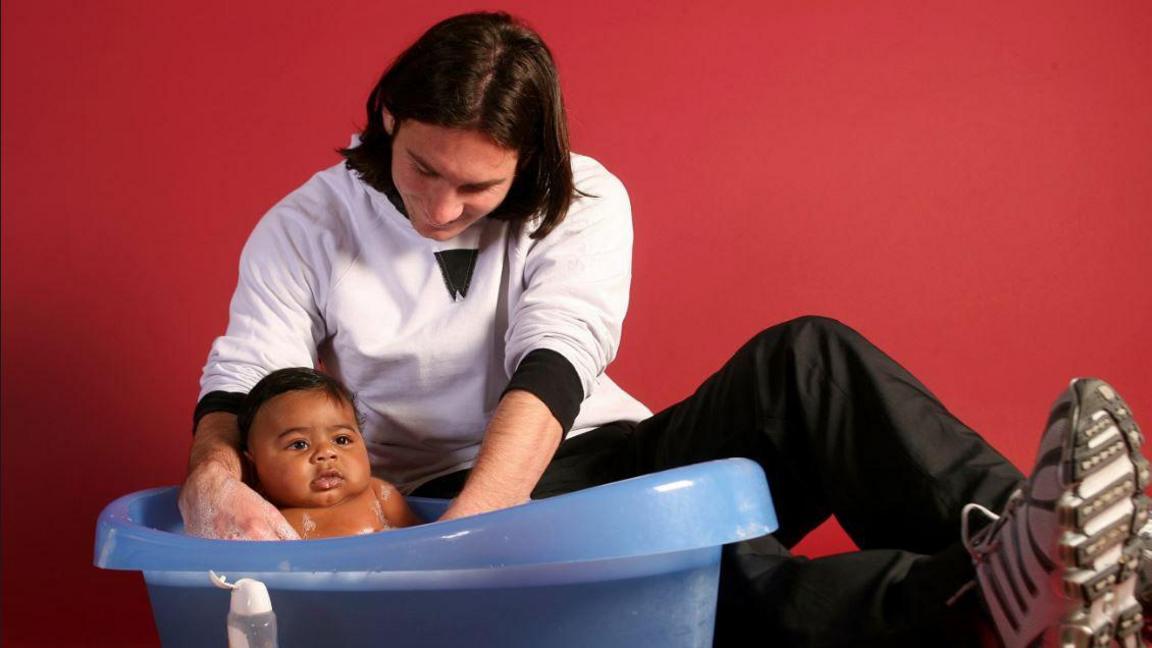
On the other side is Lamine Yamal. Nearly two decades ago, a 19-year-old Messi held the three-month-old Yamal in a plastic bath during a charity-calendar photo shoot. Now the baby from that photograph is Spain's most dangerous winger at 19 years old, young enough that Messi played in a World Cup before he was born (the story behind the photograph). Their first competitive meeting will be a World Cup final.
The final gives us the tournament’s most profilic attack against its most complete team. Argentina have scored 19 goals and conceded seven. Spain have scored only 13 but conceded one. Messi has either scored or assisted 12 of Argentina’s 19; Spain have distributed the work across Rodri, Mikel Oyarzabal, Dani Olmo, Fabián Ruiz, Pedro Porro, Pau Cubarsí, and Yamal.
FIFA’s technical model credits Spain with 14.96 expected goals and 2.44 expected goals against. Argentina are at 15.38 and 4.18. Their chance creation is almost identical in raw volume despite Argentina playing 60 more minutes. Spain have separated themselves by conceding fewer and controlling far more of the territory between the penalty areas.
Though Spain should be favoured, Argentina have spent an entire month showing us anything is possible.
The 2026 FIFA World Cup final kicks off Sunday, 19 July, at 3 p.m. Eastern Time (19:00 UTC) at New York New Jersey Stadium in East Rutherford (FIFA match preview).
Two roads to the same field
Spain’s only failure to win was a misleading 0-0 against Cape Verde in which they produced 27 shots and 2.26 xG while allowing 0.13. They then beat Saudi Arabia, Uruguay, Austria, Portugal, Belgium and France without ever trailing. Belgium are the only team to score against them; in the quarterfinal and semifinal, Spain out-created Belgium and France by a combined 4.41 to 0.82 xG.
Argentina won all seven matches and scored at least twice in each, but their route has been shakier. They needed extra time against Cape Verde and a ten-man Switzerland squad, recovered from 2-0 down against Egypt, and trailed England until the 85th minute of the semifinal. Enzo Fernández equalised, Lautaro Martínez won it, and Messi supplied both assists. Spain have not spent a second behind this entire tournament; Argentina have spent more than 100 minutes there (Associated Press).
Spain also faced the harder bracket. Their knockout opponents averaged 10.3 in the pre-tournament FIFA ranking, compared with 29.8 for Argentina. Spain faced three top-ten teams after the group stage, Argentina one. Ranking averages are imperfect, but this advantage is large enough to nontrivially matter (June FIFA rankings; Elo table). Spain will also have one extra recovery day and 60 fewer match minutes in their legs, which will help with depth and recovery efforts.
Advanced statistics
The fairest comparison is per 90 because Argentina have played 690 scheduled minutes to Spain’s 630. I summed FIFA’s 14 official group-stage and knockout technical reports, excluding stoppage time from the normalisation.
| Tournament metric | Spain | Argentina |
|---|---|---|
| Goals for-against | 13-1 | 19-7 |
| FIFA xG-xGA | 14.96-2.44 | 15.38-4.18 |
| xG difference per 90 | +1.79 | +1.46 |
| Shots per 90 | 17.1 | 14.7 |
| Opponent shots per 90 | 6.3 | 7.2 |
| Completed passes per 90 | 593.7 | 564.0 |
| Completed line breaks per 90 | 139.9 | 106.0 |
| Forced turnovers per 90 | 49.0 | 38.7 |
| Distance covered per 90 | 114.2 km | 106.0 km |
Spain lead every process measure in the table. They create more shots, complete 34 more line breaks, force ten more turnovers, and cover eight more kilometres per 90.
The finishing aspect favors Argentina. They have scored 3.62 more goals than their xG, a 23.5 percent overperformance. Spain have scored 1.96 fewer. At the defensive end, Spain have conceded 1.44 fewer than expected while Argentina have conceded 2.82 more. A separate data feed puts Unai Simón at a 90 percent save rate and Martínez at 56.25 percent (Flashscore tactical analysis).
Regression would make these profiles less extreme: Spain are unlikely to concede once every seven matches forever, and Argentina are unlikely to keep finishing 24 percent above expectations.
Leading up to the tournament
Spain went 5-1-0 in European qualifying, scoring 21 and conceding two while holding 65.34 percent possession and completing 91.84 percent of their passes (UEFA). They have now gone 37 matches unbeaten, with 28 wins, nine draws, and a 94-28 goal difference. Sunday offers a chance to pass Italy’s European record (Sports Illustrated).
Argentina finished nine points clear in CONMEBOL qualifying with 38 points and a 31-10 goal difference. Through Scaloni’s first 100 matches they went 73-18-9 and conceded 52 goals (AFA); at the 2024 Copa América they conceded once in six matches. Seven goals allowed in their past five games are a real warning, especially with Martínez struggling.
This is much more than Messi versus Yamal
FIFA credits Messi with eight goals, four assists, 34 shots, 19 on target, and 6.16 xG. His 12 direct goal involvements account for 63.2 percent of Argentina’s scoring (FIFA finalist statistics). Kylian Mbappé’s brace in the third-place match moved him to ten goals, so Messi needs a hattrick performance to pass him for the Golden Boot (Associated Press).
Yamal has only one goal, but ten shots on target and a finalist-leading 27 receptions behind the defensive line. Spain does not need him to run the offense like Messi does for Argentina. Oyarzabal has five goals and 53 forced turnovers. Rodri has completed 648 of 694 passes and made 919 high-intensity runs. Cubarsí has completed 97 percent of his passes while defending half a pitch at 19 years old. Spain is clearly the more complete team all around; Yamal needs to simply continue breaking through defensive lines and adding flair to Spain's tactics.
Argentina’s support must form their own chain wall too. Enzo has completed 448 of 483 passes and forced 43 turnovers. Paredes has become a knockout-stage star, Álvarez supplies the pressing and channel running that Messi cannot, and Lautaro has already decided the semifinal from the bench. The real question is whether they can deliver Messi the ball while Rodri, Laporte, and Cubarsí are facing him.
Spain’s likely XI:
Spain — 4-2-3-1
- Goalkeeper: Simón
- Defence: Porro, Cubarsí, Laporte, Cucurella
- Double pivot: Rodri, Fabián
- Attacking midfield: Yamal, Olmo, Álex Baena
- Striker: Oyarzabal
Argentina’s projected XI:
Argentina — 4-4-2
- Goalkeeper: Martínez
- Defence: Molina, Romero, Lisandro Martínez, Tagliafico
- Midfield: Paredes, Mac Allister, Enzo, Giuliano Simeone
- Forwards: Messi, Álvarez
De Paul is Argentina’s main bench alternative. Yamal and Porro have been declared available after minor discomfort (latest Spain update).
Four tactical questions
1. Can Argentina close Rodri without opening Olmo?
If Argentina remain in a flat 4-4-2, Laporte and Cubarsí can circulate until Rodri becomes free. If Paredes steps toward him, Olmo occupies the space behind; if Enzo jumps, Fabián becomes the third man. Spain’s 979 completed line breaks show what happens when one opponent loses that choice.
Argentina should not press every first pass. Álvarez can curve his run to screen Rodri, Messi can protect the lane toward Spain’s left, and Paredes can stay near Olmo until a poor touch or wide pass triggers pressure. This accepts that Messi will not chase centre-backs for 90 minutes. It also asks Argentina to answer the same positional question dozens of times without one tired player stepping at the wrong moment.
2. Can either Argentina fullback survive a two-against-one?
Yamal against Tagliafico is a pretty obvious duel, but Porro creates a threat to overload Argentina's left defensive flank. If Tagliafico shows the left-footed Yamal inside, he enters a shooting range. If he blocks that route, Porro can overlap. Mac Allister or Giuliano must recover, and Romero may have to slide across. Each helper leaves a Spanish midfielder or Oyarzabal at the center freer.
Argentina’s best route runs down the opposite side, behind Cucurella. Messi delivered both semifinal assists after drifting right, and Spain’s only conceded goal began with a cross from that side of their defence. Molina or Giuliano can pull Cucurella wide, allowing Messi to receive between him and Laporte before Álvarez attacks the box.
However, this specific manuever has a defensive cost. Messi will not follow Cucurella toward his own box, while Baena drifts inside to clear the overlap. Molina may thus face another two-against-one. Whoever occupies Argentina’s right side must pay for Messi’s lackluster defensive efforts.
3. What happens when Oyarzabal leaves the centre-backs?
Oyarzabal’s five goals describe only a fraction of his value. He drops between the lines, leads the forward press, and lets Olmo or Yamal attack the space he empties. Romero and Lisandro enjoy stepping in front of strikers; following Oyarzabal too far would open the areas behind them. Instead, Paredes should cover the dropping forward so the centre-backs can protect depth.
4. Can stoppages or substitutions break Spain’s rhythm?
Argentina have scored seven set-piece goals: one penalty, four from corners, and two direct free kicks. Messi has delivered 16 corners into the area, with Romero and Lisandro attacking the first contact. A corner is the rare possession that begins with Spain’s entire defence already compressed near its own goal.
Argentina have also scored 12 of their 19 goals after the 70th minute. Scaloni can add Lautaro, move Enzo higher, and turn a positional battle into constant box entries. Spain have their own closer in Mikel Merino, whose late goals eliminated Portugal and Belgium, plus fresher legs from one extra rest day and 60 fewer minutes. Extra time would take Argentina beyond their 800th scheduled minute of the tournament.
The first goal changes everything
Spain have not trailed yet, which poses an unanswered question. An Argentina goal would force both Spanish fullbacks higher and create the transition spaces Scaloni wants. Meanwhile, a Spain goal would require Messi to participate in a higher press while exposing Tagliafico and Molina.
A scoreless final hour is less clearly Spanish. It favours their fresher bench and territorial process, but pulls the match toward one Messi action, one set piece, or a shootout. Simón has been the better goalkeeper during open play, but penalties could easily reverse this. Argentina have won six of seven World Cup shootouts, with Martínez’s delay-and-distract routine now part of their competitive identity. Also recall that Spain lost the 2025 Nations League final on penalties. Those samples are small, but they can affect the final ten minutes of a tied game.
Historically, the teams have six wins each and two draws in 14 meetings, but 13 were friendlies. Argentina are trying to become the first repeat men’s champions since Brazil in 1962. Spain are trying to repeat their own 2008-10 Euro-to-World Cup double. This is also the first final between reigning European and South American champions, and the first all-Spanish-speaking final since 1930 (FIFA history).
Quantitative modelling
For a simple baseline, I averaged each finalist’s FIFA xG rate with the opposing xGA rate. Spain’s 2.14 attacking xG per 90 and Argentina’s 0.55 defensive xGA produce 1.34 expected goals; Argentina’s 2.01 and Spain’s 0.35 produce 1.18.
Independent Poisson distributions then give Spain a 40.5 percent chance of winning in regulation, Argentina 32.7, and the draw 26.8. The model makes 1-1 the most likely exact score, but only at 12.7 percent, and places under 2.5 goals at 53.9 percent. Splitting every drawn game evenly after regulation would make Spain a 53.9-46.1 favourite to lift the trophy.
That model ignores schedule strength, rest, game state, and penalty skill. Opta’s broader simulation puts Spain at 59.46 percent to lift the trophy (model summary).
Spain should have more possession, final-third entries, and shots. Argentina should protect the centre and wait for the few moments when both Spanish fullbacks are ahead of Rodri. The critical question is whether Argentina can make the match discontinuous. A continuous game of 15-pass possessions favours Spain. A game broken into set pieces, second balls, and substitutions favours Argentina.
Based on my model, my regulation-time score is 1-1. I expect Spain to lift the golden trophy with approximately 55-45 odds. 2-1 after extra time is the most plausible winning score.
The final has been advertised as the old magician facing the new one. In reality, it is a genius trying to fight an entire battalion. In 2016, New Jersey looked like the place where Messi’s Argentina story ended. On Sunday, he returns to see if that same field can provide a different final fate. Spain will spend the night trying to ensure that football’s most elaborate script is broken on its last line.